Embroidery and lacework
POL,
Murowana Goślina
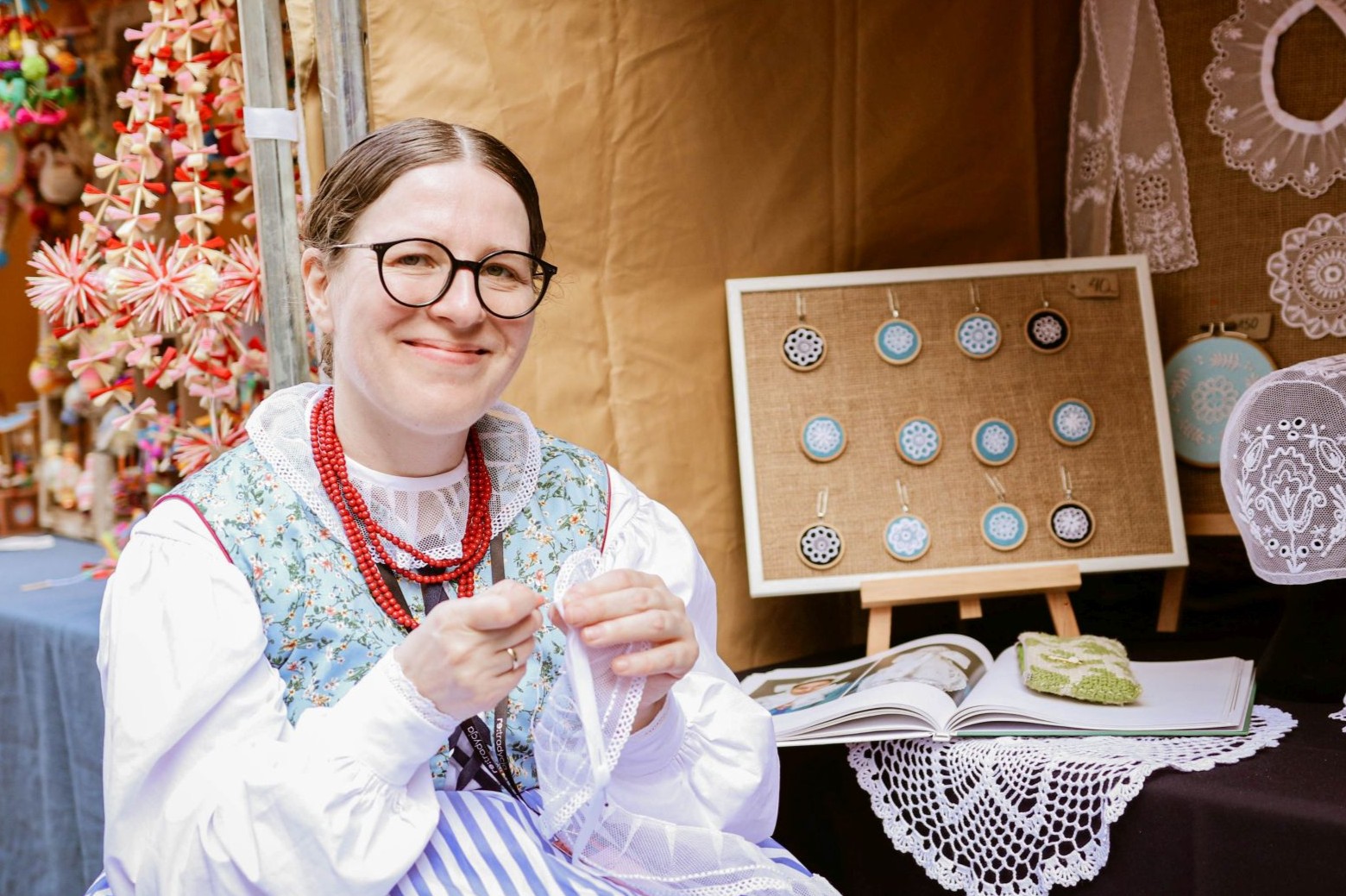


Główną dziedziną kontynuowaną dziś przez panią Paulinę Młynarczak jest haft na tiulu – a dokładnie haft bamberski i szamotulski, które są ściśle związane z elementami strojów ludowych tych regionów.
Chociaż droga twórcza pani Pauliny rozpoczęła się kilkanaście lat temu od szydełkowania, z czasem skierowała się ona także ku koronce. Rozwijanie umiejętności związanych z kolejnymi technikami doprowadziło twórczynię do momentu, w którym postanowiła dowiedzieć się więcej o lokalnych, wielkopolskich wzorach. Jak sama mówi: „Bardzo często pytając różne osoby, natrafiałam na odpowiedzi, że u nas w Wielkopolsce to nic nie wykonywano. Dziś wiem, że zadawałam pytania niewłaściwym osobom. W czasie trwania pandemii trafiłam na „Atlas polskich strojów ludowych – Strój Szamotulski” Adama Glapy. Tam pierwszy raz świadomie zwróciłam uwagę na elementy stroju szamotulskiego, lecz nie mogłam odszukać informacji o sposobach wykonywania haftu. W atlasie było jednak zamieszczone zdjęcie szydełkowej kryzy. Odszukałam w internecie więcej zdjęć kryz i postanowiłam wyszydełkować pracę na „Konkurs na haft i koronkę” organizowany przez Szamotulski Ośrodek Kultury w 2021 roku.”
Her first findings motivated her to dig deeper – in 2022, Paulina and her husband started museum hopping with the objective of visiting all museums in Wielkopolskie voivodeship.
“We’ve traveled far and wide, met many people throughout the way, and different tour guides with whom I had fascinating discussions. That’s actually how I got into an event, ‘The Living Open-Air Museum’ organized by the Wielkopolskie Ethnographic Park, where I had the pleasure of talking to Alicja Gniazdowska, a professional Hazak-style embroiderer who showed me some basics”.
W tym samym roku Szamotulski Ośrodek Kultury utworzył koło hafciarskie, w ramach którego zainteresowane panie zaczęły nie tylko pogłębiać wiedzę o technikach wykonywania lokalnego haftu, ale wyszukiwały też stare czepce, stające się dla nich źródłem wzorów. Pani Paulina zaczęła tworzyć m.in. serwetki na podstawie motywów zaczerpniętych z dawnych czepców, kryz i fartuchów. Dziś wzory te przenosi także na mniejsze formy – broszki czy tamborki. I tak na tiulu, przy pomocy bawełnianych nici i muliny powstają misterne kompozycje nawiązujące do dziedzictwa regionu.
Pani Paulina stale pogłębia swoją wiedzę, prowadząc osobiste badania i poszukiwania. Zwiedza muzea, wykonuje zdjęcia, przeszukuje stare (zdigitalizowane) gazety, odnajduje dawne fotografie oraz kontaktuje się z hafciarkami z innych regionów. W 2023 r. zrealizowała projekt „Skarb Szamotulski” – jej rolą była konsultacja merytoryczna, ale także rozrysowanie schematów haftu na podstawie zbiorów Muzeum Zamek Górków w Szamotułach oraz prowadzenie warsztatów.
Następnie zaczęła zajmować się także haftem bamberskim – prowadzi grupę hafciarską przy Muzeum Bambrów Poznańskich oraz realizowała projekt stypendialny pn. „Czepek odświętny i uroczysty u Bamberek”. Uczestniczy też w spotkaniach koła haftu pałuckiego przy Muzeum Regionalnym w Wągrowcu.
Oprócz haftu zajmuje się również szydełkowaniem. Jako wolontariuszka współpracuje z Towarzystwem Bambrów Poznańskich.
Tradycje kulturowe Bambrów Poznańskich zostały w 2018 r. wpisane na Krajową Listę Niematerialnego Dziedzictwa Kulturowego.
Kontakt
www:
Wyszywoczka Paulina fb
Wyszywoczka ig